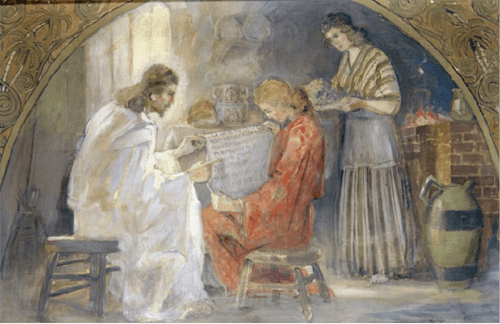
“According to your faith be it done to you.”
Matthew 9:27-29
Christology can be defined as using faith to attempt to understand God and understanding what it means for Jesus to be fully human. The women of African experience suffering in their practice of faith. In many African societies, women are considered inferior to men and assume household work. Michael Himes claims that it is human nature to have a thirst for the truth. These women seek the truth, but some have a different time finding it. Jesus came to heal this broken humanity.
Jesus taught his ministry to all. There was no distinction of who was considered children of God. In Jewish tradition of biblical times, all women were seen as inferior, sexual beings. Man was made in the likeness of God and woman was made in the likeness of man. However, Jesus challenged this through his miracles, for example the hemorrhaging woman. She was not only a woman, but also considered unclean. In the parable of the mustard seed, both man and woman were essential to growth. Jesus formed relationships with women. Mary Magdalene, the Apostle of Apostles, encouraged Jewish women to spread Jesus’ ministry. Through her work, Jesus found many female disciples.
For the African women, Jesus was an outlet for freedom in an oppressed society. Through Him, these women learned tolerance and appreciation for life. Women literally give life to society. Devotion to Christ allows them to combine their authentic religious selves with the harmony of spirituality. To these African women Jesus is strength, hope, a model, a helper, a teacher, the closest friend, and the core of one’s life. He provides courage to endure hardships with hope that God will prevail.
To me, the African women might be more devout than I am. They have every reason to complain, yet they remain resilient to the faith. In a world of instant gratification, I have lacked in my faith. Most of these women are nurturers who make sacrifices for the ones they love. They work tending to children, crops, schools, and other difficult tasks. Similarly, Jesus is our nurturer and source of eternal love. He sacrificed himself for the forgiveness of our sins. I would expect Jesus to send the Holy Spirit upon these women to spark creativity and foster a sense of community). These women worked together to strengthen their faith and devout their lives to Christ. Daily suffering is no longer painful because they will be reunited with Jesus once again.
Today, Christians attempt to answer the essential question of Christology: Who do you say that I am? Through descending and ascending Christology, we say that Christ is the Mother and Redeemer. Through His suffering and death, Jesus taught us that he was fully human. Yet, he taught us to have faith that he would come again. Three days later he rose and continues to fulfill his role as the nurturing mother.
I admit that I struggled with Christ our Ancestor. I found it to be a stretch, at least in my opinion. I did agree with some concepts. Jesus and Mother Mary are seen as the ancestors to Bantu Christians. Christ is our ancestor in the sense that he is “the water the salt comes from.” God is the overflowing of life. In Bantu tradition, the eldest son made a great offering to the. ancestors. Jesus as the only son of God made the greatest offering of his own life. Christ is the origin and end of all things. He is the door to forming and maintaining a relationship with the Lord.
Other concepts were too far-fetched for me to agree with. However, I do believe it is important to highlight the role and equality of women in Jesus’ ministry. Jesus took a special liking to the outcasts (which were usually women), but treated them like everyone else. He taught that they were responsible for their sins and required forgiveness. I believe that Jesus is trying to fix the broken humanity in regards to the COVID-19 pandemic. Too many people have turned away. I, myself have not been as strong in my faith as I usually am. People need to recognize Jesus’ presence in their lives and form unique relationships with Him like the African women.
 Macayle Fuchs
Macayle, Good and honest engagement with the readings – I appreciate your taking seriously and active struggling (rather than dismissing) the Christ our Ancestor & taking to heart to consider the Women’s reflections in light of your own faith. well done.
LikeLike