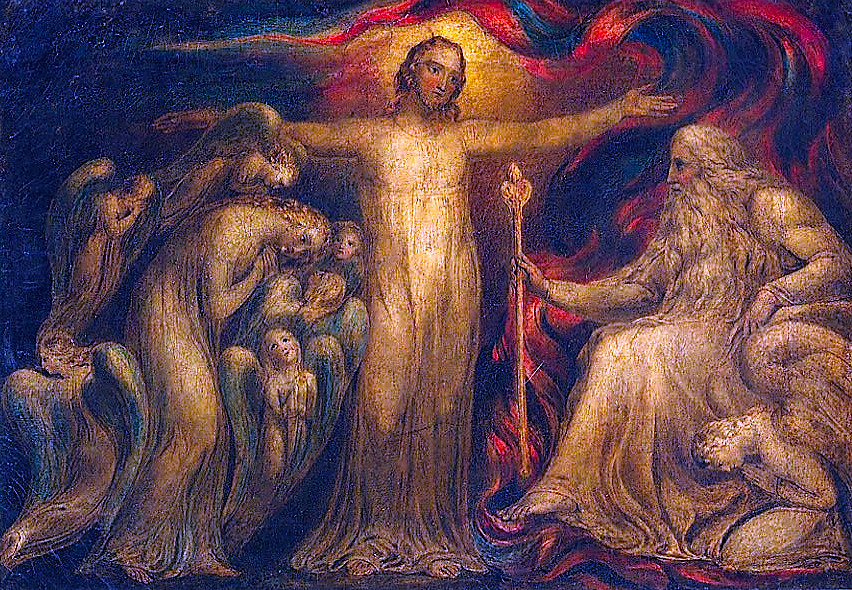
Does God suffer? What does the cross mean?
As we understand it, the cross is a symbol of Jesus’ and the atonement. Jesus died to atone our sins. However, there are two sides to the debate of whether God suffered through His Passion.
(1) Medieval Assumption. During the Medieval times, Christians believed that God did not suffer because He is the ultimate perfection. Suffering with human emotion would diminish the divinity of God. This idea paints the image of a sadistic God. Schillebeeckx corresponds with this thought. He believes that the cross is between God and Humanity. God does not suffer, but he does feel compassion. However, the idea of compassionate solidarity undoes the idea of a perfect God. (2) Moltmann believed the opposite. Through God’s compassion, He suffers with people who are exploited, out of love.
I believe that God suffers, but not in a physical human sense. God is compassionate, so it only makes sense that he goes through anguish when we sin against Him. He is merciful, but also powerful.
Cone had a unique perspective on the cross and the lynching tree. The song “Strange Fruit” tries to encompass Cone’s explanation of the suffering of African Americans both during times of slavery and today. He says that the lynching of African Americans is an “invisible” symbol, while the cross is a revered and “visible” symbol. Cone creates these comparisons to combat racism, to liberate African Americans “from the Bible that was supposed to enslave them.”
Cone describes how African American worship is different from the traditional masses. They celebrate loud and rambunctious as if God’s Spirit had touched their souls. However, it is important that they do not become too emotional so Church leaders do not become corrupt for financial gain. In order to show the commitment to the Gospel, theologians and priests subject the Word to the justice and merciful God. As the saying goes, God works in mysterious ways. Priests must teach through the Mysterium Tremendum. They need to lead by example; read, think, and live the Gospel. Martin Luther King Jr. lived the Gospel through his activism.
However, God is not an object we can control. Cone mentions Former President Bush’s speech regarding his declaration of war on terror. Cone believes that Bush called on our “Heavenly Father” as if he could possess him. In reality, God possesses us and transforms out lives because the Good News is not human word. But how does the lynching tree factor in? The Gospel is God’s message of liberation in a tortured world. The Gospel is offensive. It does not tell us what we want to hear, even though we try to think that it does. Cone believes that the Gospel is black word in the world of white supremacy.
“We must face this cross as the terrible tragedy it was and discover in it, through faith and repentance, God’s suffering solidarity with today’s crucified people, which bestows on them the power to resist the daily crosses of injustice in their lives.”
Cone, p. 52
Cone believes that the Cross of Jesus Christ is not Good News. The disciples did not understand and ran away from the persecution before Jesus’ death. The Passion of the cross relates to those tortured or put to death by human cruelty. They were tortured through humiliating public spectacles for criminals. Cone’s true meaning of the cross prevents the symbolism of God’s love from becoming romanticized. Cone relates Jesus’ suffering and the lynching victims’ suffering to the modern day criminal justice system. African Americans make up a majority of jail populations and are not given adequate funding for schools, according to Cone. People are lynched when they are denied the basic necessities of life. Suffering African Americans are like Christ because they had no choice in the matter.
Roberto Goizueta wrote the “Calvary to Galilee.” Goizueta believes that our questionable and selfish practices go against the basis of our faith. Through the suffering of Jesus’ crucifixion, we can learn how to walk with God. The crucifixion forces us to confront painful consequences of abandoning faith and morals. There is no closure to this.
“Past injustices are never erased by future victories…the resurrection of the body does not justify the crucifixion, it justifies the crucified victim.”
Goizueta, p. 12
There is no closure, but Jesus welcomes those who have abandoned faith and morals. We make ourselves too comfortable. We put ourselves in situations that promise security. People who are outcasts or wounded threaten that security, so we distance ourselves from them. In reality, there are mirrors of our own souls. Finding solidarity with wounded people acknowledges our common powerlessness, especially in front of God.
Jesus’ journey starts and ends in Galilee. Galilee was an “in-between’ town. It was a region of mixed people deemed “Galilee of the Gentiles” full of racial, cultural, and religious impurity. God chose to become Galilean through Jesus to be part of the despised and lonely community. Through Jesus, God teaches us that to properly recognize the crucifixion we must touch the. untouchable. We need to gain the power to do two things: (1) overcome the fear of proclaiming the Good News among unfriendly people and (2) overcome the fear of discovering the Good News among unfriendly and impure people. We have to risk that the purity of your faith will be threatened.
Both Cone and Goizueta believe that the lynched and the untouchables are the most like Christ. They suffer due to circumstances out of their control. Both believe that injustice is a product of our poor morals and stray from faith. Cone believes the word of God is offensive because it tells us “straight up.” Through “white supremacy,” the Bible enslaves people (specifically African Americans). Preachers, of all races, can twist the Gospel for their personal gain. In America, Cone believes you cannot understanding the suffering of the cross without the lynching tree. Jesus, just like a slave, was tortured because he was an outcast. He suffered human cruelty at the hands of unfaithful others. Still today, the justice system is bias toward marginalized communities. The cross provides hope because Jesus conquered the cross. Through devout faith, Jesus was resurrected. Goizueta emphasized having the power to find the Good News in the poor and suffering. This works hand in hand with Cone’s point that African Americans suffered to find greater victory to overcome that suffering. The suffering are still good people. Everyone is worthy of God’s love.
I actually found the Cone text quite offensive. I understand the point of the writing and the message it conveys in relation to suffering. Both Jesus suffered and African Americans suffered in history. I did not agree with the comments about the Bible that is meant to enslave people. the Bible is an all inclusive book of love. I do not think that Jesus’ suffering should be compared to lynching. Yes, they are both horrific acts. However, this text went against my faith.
 Macayle Fuchs
Macayle, I am glad you grappled with Cone’s essay. But I think you misinterpreted his point about the Bible…In the United States, the Bible was used to try and control enslaved peoples. Cone is not saying that the Bible enslaves but that it has been used historically for this – which is simply historical. Similarly, Cone is pointing to African American Christianity as resistance to that and the message of the Bible coming through. Part of how and why the word of God is “offensive” is the that the message itself is inherently a threat to any unjust power that is or seeks to enslave/control others — this is the point Cone is making in the essay. It is important to put Cone & Goizueta in conversation because Goizueta (whose writing style is easier) helps elaborate on Cone’s argument that the cross is not abstract but a direct result of the life that Jesus of Nazareth lived….and connected to the margins of society/power.
LikeLike
Okay, thank you!
LikeLike